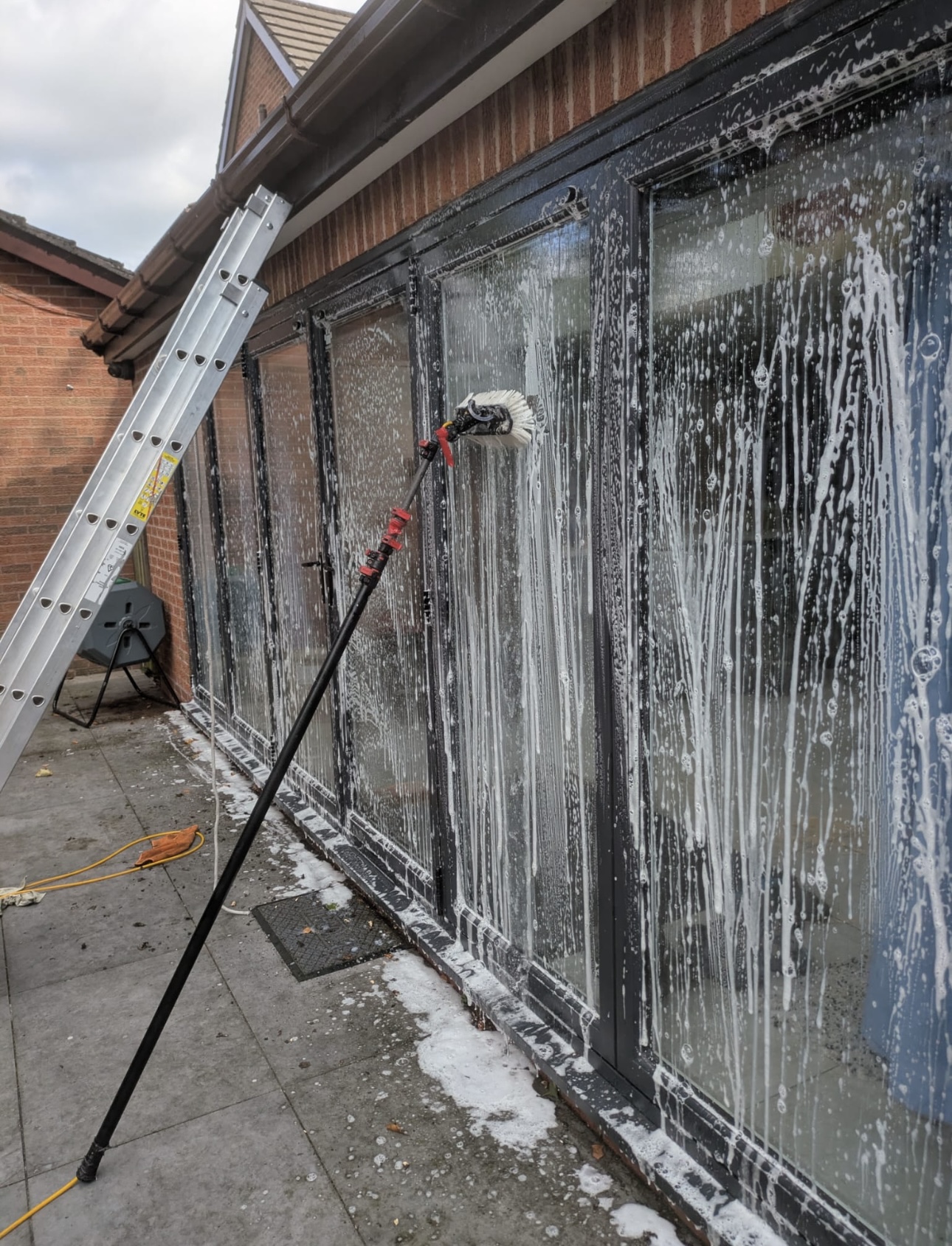

The UK’s weather plays a much bigger role in how windows look and age than most people realise. Rain, wind, sun, pollen, and frost don’t just make windows look dirty, they each leave behind different residues that affect the glass in different ways. Understanding the relationship between weather and window cleaning helps explain why some marks return quickly and why certain types of cleaning work better at different times of year.
This is where seasonal window cleaning becomes less about routine and more about protecting your windows properly.
Rain: Water Spots, Mineral Deposits, and Streaking
Rain is often blamed for dirty windows, but rain itself isn’t the problem. As rain falls, it collects airborne pollution, dust, and minerals before landing on the glass. When the water dries, these particles are left behind as visible spotting and dull patches.
Over time, repeated rainfall can cause mineral deposits to build up, leaving windows looking cloudy even after a quick wipe. This is why cleaning windows in rain is not only possible but often necessary to remove residue that ordinary rainfall cannot wash away.
The most effective cleaning for rain-affected windows is a pure water rinse, which lifts mineral deposits and dries without leaving streaks. This method restores clarity rather than simply moving marks around the glass.
Wind: Dust, Grit, and Abrasive Build-Up
Wind carries fine dust, grit, and debris that settle on windows and frames. These particles may look harmless, but they can become abrasive if wiped incorrectly. Over time, wind-driven dirt collects around seals and frames, gradually dulling the glass surface.
In exposed areas, window cleaning in bad weather needs to be handled carefully. The correct approach starts with rinsing the glass thoroughly before any agitation, allowing loose grit to be removed safely. Frames and sills also need attention, as built-up debris can be dragged across the glass during cleaning if ignored.
Sun and Heat: Smearing and Residue Visibility
Bright sunshine and warm temperatures create a different challenge. Cleaning solutions can dry too quickly in direct sunlight, causing smears and visible streaks that are far more noticeable once the glass dries.
In these conditions, cleaning methods must be adjusted. Working in smaller sections and carefully controlling moisture levels helps prevent residue from setting on the glass. This is a key reason why results can vary dramatically depending on weather, even when the same products are used.
Pollen and Spring Debris: Sticky Films on Glass
Spring introduces pollen, which behaves very differently from dust or rain spots. Pollen forms a sticky film that bonds to the surface of the glass, often leaving a hazy appearance rather than visible marks. Light rinsing alone is rarely enough to remove it fully.
After heavy pollen periods, windows often require a more thorough clean, including agitation of the glass and frames. This is one of the most important times for seasonal window cleaning, as pollen build-up can linger for months if not properly removed.
Autumn Leaves and Organic Staining
During autumn, falling leaves and organic debris introduce tannins and sap onto windows and sills. When wet leaves sit against glass or frames, they can leave behind brown staining that ordinary cleaning struggles to remove.
This type of contamination often needs repeated rinsing and careful cleaning around frames and seals. Removing organic residue early prevents staining from becoming permanent, particularly on window surrounds.
Frost and Cold Weather: Bonded Grime and Fragile Conditions
Cold weather brings frost, which can cause existing dirt to harden and bond more tightly to the glass. Attempting to scrape or aggressively clean frozen residue can increase the risk of fine scratches, especially on older windows.
In colder conditions, window cleaning in bad weather requires temperature-appropriate methods that loosen grime without force. Allowing surfaces to thaw naturally and using gentle techniques helps protect the integrity of the glass.
Why Seasonal Window Cleaning Protects Your Windows
Each season leaves behind different contaminants, minerals in winter, pollen in spring, dust in summer, and organic matter in autumn. Without adapting the type of cleaning used, these layers can gradually build up, reducing clarity and shortening the lifespan of windows.
This is why seasonal window cleaning is about more than appearance. Adjusting cleaning methods based on weather ensures that residues are properly removed, rather than repeatedly cleaned over.
Final Thoughts: Understanding Weather Means Better Window Care
UK weather is unavoidable, but its effects on windows don’t have to be. By understanding how different conditions impact glass, it becomes clear why professional cleaning methods change throughout the year. Effective weather and window cleaning isn’t about fighting the elements, it’s about working with them to keep windows clearer, cleaner, and better protected all year round.
How Often Should You Have Your Windows Cleaned?
There isn’t a single answer that suits every property, because weather and window cleaning are closely linked. UK weather doesn’t just affect how quickly windows get dirty, it determines what builds up on the glass and how it should be removed.